Hume–Adams secret talks and exchange of documents
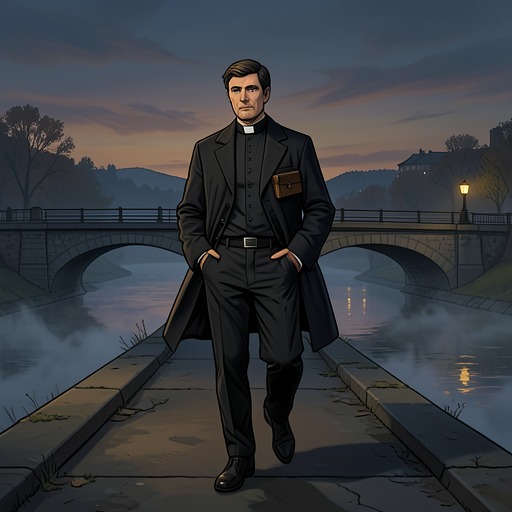
Say NothingThe Hume–Adams secret talks and exchange of documents were an exploratory attempt to open a political route out of Northern Ireland’s conflict. John Hume and Gerry Adams, leaders of traditions divided over the use of violence, began a private dialogue and agreed to put their organisations’ positions into writing. Father Alec Reid helped make contact possible; his later delivery of a Sinn Féin position paper, carried from Belfast to Derry in an envelope smudged with blood, gave the negotiations a precarious physical emblem.
Background and the case for dialogue
The talks emerged from a society in which political exclusion and armed conflict had deepened one another. Catholics in Northern Ireland faced discrimination in employment and housing and lacked executive representation at Stormont for half a century. In 1969, student protesters set out from Belfast for Derry to oppose that inequality, believing peaceful protest might redraw the conflict’s divisions. But the march was met with hostility, and the attack at Burntollet Bridge helped change Dolours Price’s view of nonviolent resistance. She later joined the Irish Republican Army, a turn that reflected a wider movement from street protest toward armed organisation.
By the 1980s, the political possibilities were changing again, though not in a simple or uncontested progression. After Frank Maguire’s death created a by-election, republicans put imprisoned hunger striker Bobby Sands forward as a candidate. Sands’s victory showed the force electoral politics could acquire even within a movement long suspicious of parliamentary participation. Adams, elected president of Sinn Féin in 1983, came to believe that Irish unity could not be achieved through armed force alone. Yet the armed campaign and electoral strategy remained difficult to reconcile: a political opening could appear to one audience as a necessary change of course and to another as a betrayal.
Reid’s initiative and the risks of contact
Father Reid believed the surest way to end the conflict was to persuade the Irish Republican Army to stop fighting. He raised the possibility with Adams and found him willing to consider it. Adams saw the Church as an organisation with the standing, credibility and communication networks to convene the parties. In the scenario he envisaged, a joint peace strategy would bring together republicans, the nonviolent nationalists of the Social Democratic and Labour Party, and the Government of Ireland.
The prospective dialogue faced a formidable obstacle in Hume himself. He had repeatedly condemned the Irish Republican Army’s violence and argued that its political wing could not credibly claim to defend the poor while its military campaign produced death and deprivation. He regarded the combination of armed action and electoral politics as a calculated contradiction. Reid nevertheless wrote to him, stressing that his aim was to help prevent further deaths and that, with careful handling, the Irish Republican Army could be persuaded to end its campaign. The appeal did not erase Hume’s objections; it offered a way to test whether dialogue could produce movement where public denunciation had not.
The danger ran in both directions. Hume risked political damage by being seen to speak with Adams, while Adams could be accused within the republican movement of having sold out the armed struggle. In 1988, that suspicion was not merely a reputational threat. Adams had to proceed carefully among people who might reject a ceasefire initiative, and any visible negotiation could put him at personal risk. The secrecy of the talks therefore expressed the limits within which political change could be attempted, not simply a preference for private conversation.
The meeting and exchange of positions
On 11 January 1988, Hume and Adams met at Clonard Monastery. Their meeting followed earlier secret conversations and Reid’s efforts to bring them together. Although they came from adversarial political positions, they found that they could talk. Hume had heard frightening accounts of Adams; in person, he encountered a personable, straightforward politician with whom he could work. That contrast helped make continued contact imaginable, without resolving the underlying dispute over violence or its political purpose.
The two men agreed to exchange documents setting out the positions of their respective organisations. The papers were intended to establish the parameters for a possible peace deal, rather than to announce an agreement already reached. Their exchange gave private dialogue a more concrete form: instead of relying only on an intermediary’s appeals or on an unrecorded meeting, each side would state its position for the other to consider. The step was tentative, but it created a basis on which political differences could be addressed directly.
Reid as courier and the fragile record
In Belfast, even transferring a document required careful arrangements. On the day two British corporals were killed, Reid was instructed to attend the funeral Mass for Kevin Brady, where a paper would be passed to him. At the requiem Mass, he received a brown envelope containing a Sinn Féin position paper. It was not simply a message from one politician to another: in the conditions of the city, its safe passage depended on secrecy, trust and Reid’s ability to move between people who might not meet openly.
Reid left with the envelope in his pocket and later ministered to the murdered soldiers, including giving mouth-to-mouth resuscitation. Blood from the scene smudged the envelope. After leaving the bodies, he returned to Clonard Monastery, transferred the papers into a clean envelope and travelled to Derry to deliver them personally to Hume. The stained covering joined the negotiation to the violence it sought to end: the document’s journey passed through a funeral, a scene of killing and the priest’s attempt to care for the dead.
The exchange did not itself constitute a ceasefire or settle the conflict. Its significance lay in establishing a clandestine channel between Hume and Adams and in turning an abstract appeal for peace into a process of contact and written proposals. Reid’s mediation helped make that process possible, while the blood-marked envelope recorded how narrow and precarious the passage from armed confrontation to political discussion remained.